Accessible transport in Las Vegas is easiest to plan as a complete chain: airport assistance, vehicle boarding, the stop or station exit, and the final route into your hotel or venue. An accessible bus or train can be useful without making every part of that journey short or step-free.
This guide covers published facilities and practical questions for wheelchair users, scooter users and travelers who want to limit walking. Official information was checked October 24, 2026. Real-time elevator availability, vehicle capacity and individual room features still need confirmation.
Before You Choose a Hotel
Start with your two or three main destinations. A hotel that is convenient for a show in the same resort may be easier than a cheaper room with several daily transfers. Use our hotel-area guide and car-free hotel guide as starting points, not accessibility certifications.
Ask the property about the specific room and route you need:
- Which entrance is step-free from the taxi or shuttle drop-off?
- How far is the accessible room from the lobby, elevators and transport pickup?
- Does the bathroom have the particular shower, seat, grab bars and clear space you need?
- Is the route to your restaurant or show step-free, including any bridges or level changes?
- If using a mobility device, where can it be stored and charged, and what is the property's policy?
Request confirmation of the features that matter to you. A general accessible-room label is less useful than the details of the actual room type.
Arrange Airport Assistance With Your Airline
Harry Reid International's special-assistance page advises arranging wheelchair assistance through your airline in advance. LAS lists complimentary wheelchair assistance; on arrival, it provides 702-261-7874 or extension 7874 from a white courtesy phone.
Tell the airline what you need at departure, on arrival and during any connection. If traveling with your own device, ask about its handling and the airline's battery documentation requirements before the trip. Keep the measurements and relevant instructions accessible without relying on a checked bag.
LAS also lists visual paging, Sunflower lanyards and other assistance resources. Check the airport's page for the service that fits your needs; not every listed third-party service is free.
Choose the Airport Transfer by Its Whole Route
For a taxi, rideshare, shuttle or private transfer, confirm whether the vehicle can accommodate your device and whether you need to transfer into a seat. A larger car is not automatically a wheelchair-accessible vehicle. Ask about ramp or lift access, securement and luggage capacity before booking a specialist service.
Standard Uber and Lyft pickups are in airport parking garages. Follow the official pickup directions, and consider the distance from baggage claim when comparing options. Our airport-to-Strip guide covers terminal-specific routes.
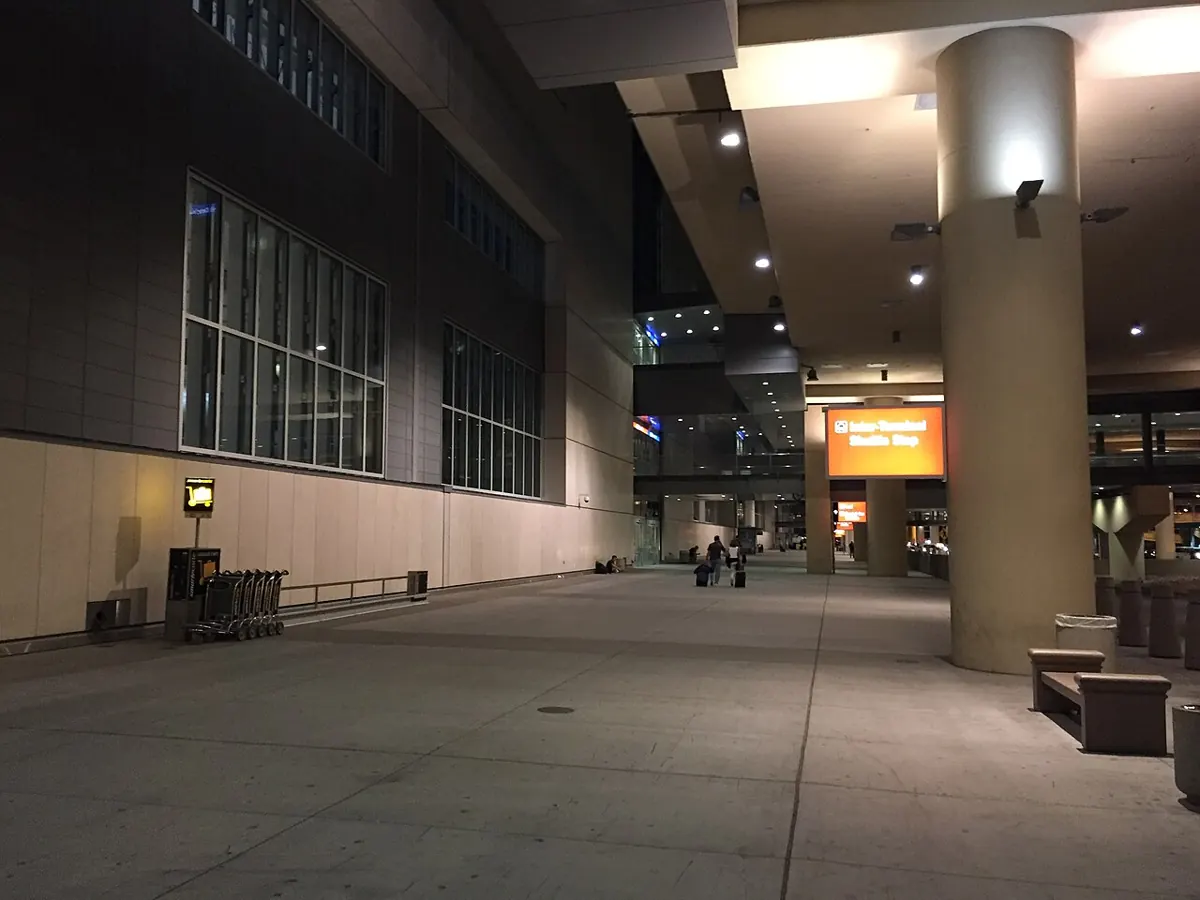
If taking public transit, LAS lists Route 108 and RED LINE at Terminal 1 Level Zero. Terminal 3 passengers first need the inter-terminal shuttle. Confirm assistance and device accommodation for that extra leg rather than assuming the bus's accessibility description covers the shuttle too.
A direct vehicle can be worth comparing when multiple transfers would be tiring. Avoid scheduling a paid reservation immediately after landing; baggage handling, assistance and the ground journey all need time.
RTC Fixed-Route Buses
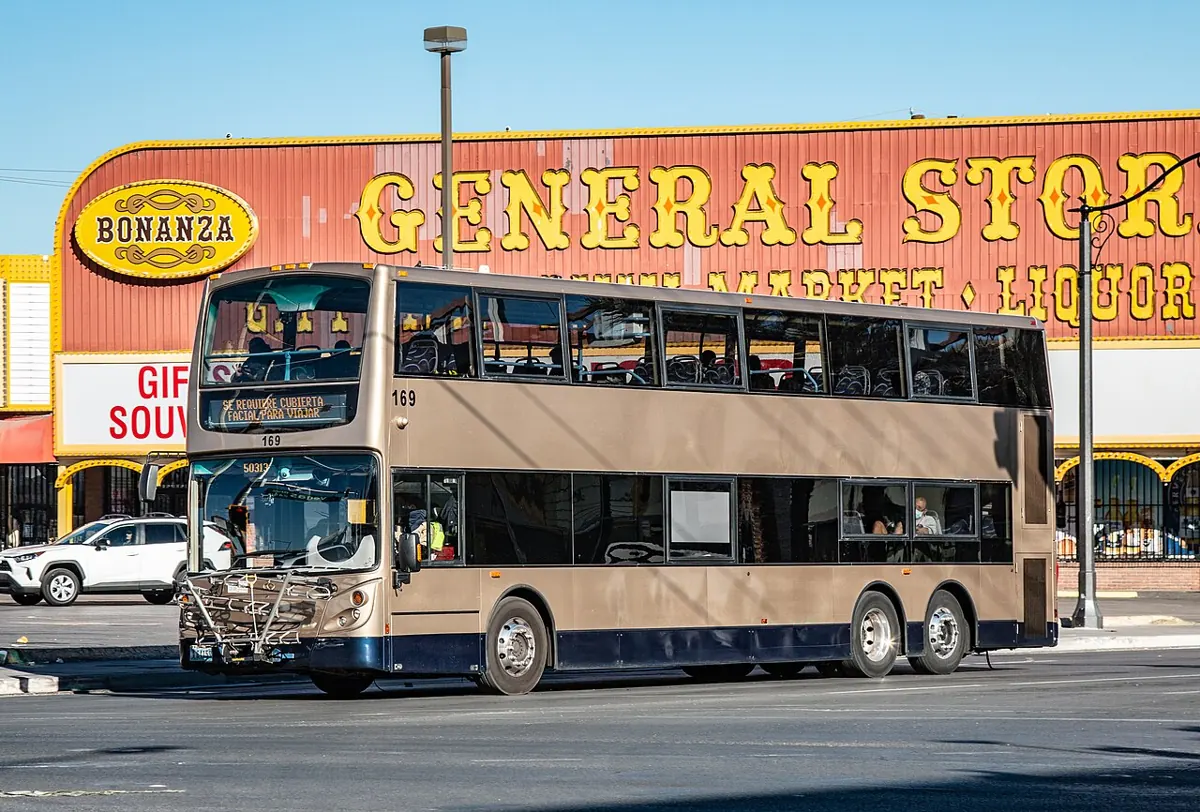
RTC describes its accessible bus features as including ramps or lifts, kneeling capability, mobility-device spaces, priority seating and audible and visual announcements.
Before choosing a bus journey, check more than the vehicle:
- Identify the exact stop, travel direction and connection.
- Check the path from your hotel entrance to the stop and from the arrival stop to your destination.
- Allow for an outdoor wait, traffic and a possible change of plan.
- Confirm device suitability with RTC if you are unsure about dimensions, loading or securement.
- Review RTC alerts and detours shortly before travel.
For Strip and downtown trips, the Deuce may be useful; for airport journeys, a transfer may be required. The car-free transport comparison explains the difference. Check reduced-fare eligibility separately: using a mobility device does not itself establish eligibility for every discount.
Paratransit Is a Separate Service
RTC paratransit is an eligibility-based, reservation-based shared service, not an on-demand wheelchair taxi. Arrange visitor eligibility before your trip rather than waiting until you need a ride.
RTC describes visitor arrangements for people eligible with their home paratransit agency, with visitor service limited to 21 days within a 365-day period. Contact RTC at 702-228-4800 to confirm the applicable documentation, booking rules and service area. Do not assume a hotel or event outside the service area can be reached just because it is marketed as Las Vegas.
Monorail: Level Boarding, but Check the Approach
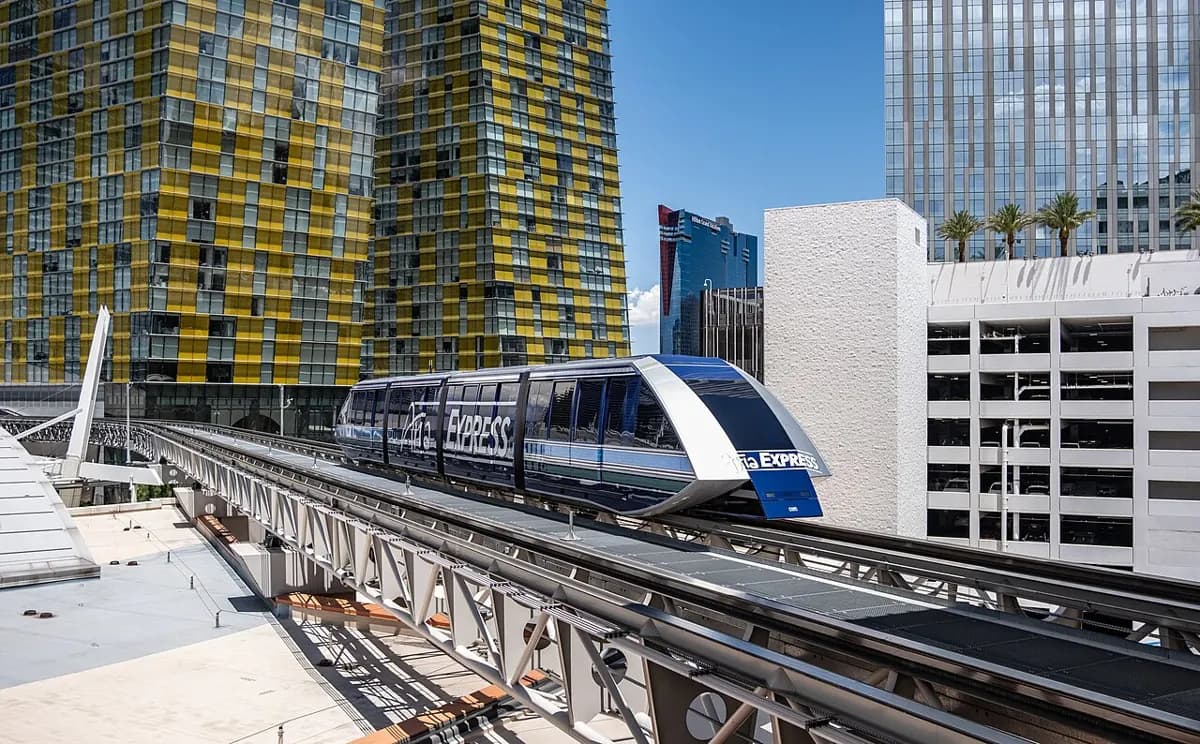
The Las Vegas Monorail FAQ describes elevators at all stations, level train boarding and mobility-device space. Wheelchairs, walkers and disability-assistance scooters are welcome, and devices should be secured with their brakes or locking mechanism during travel.
The important remaining question is the route to the station. You may need to travel through a large resort, use an elevator or cross to another property after leaving the train. A station named for Caesars Palace does not mean the entrance is inside Caesars Palace.
Check official station directions and confirm a fallback if an elevator is unavailable. The Monorail has no airport or downtown station and is not a 24-hour service. Our Monorail guide covers hours and when a pass makes sense.
Build a Day With Fewer Transfers
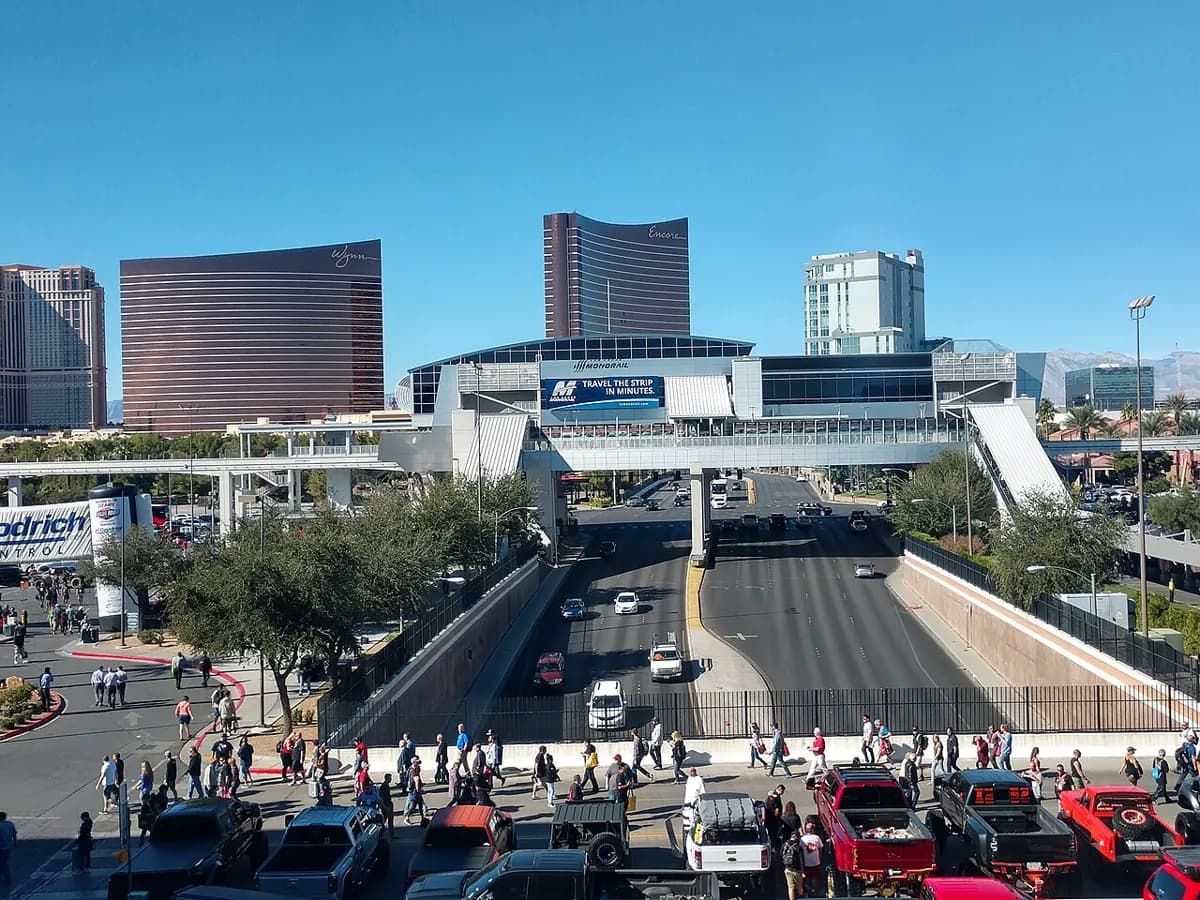
Pick one main resort area or neighborhood for each part of the day. Book a meal near the attraction you most want to see, and keep a rest stop between activities. For Convention Center visits, ask the organizer which hall entrance to use; arriving at the transit station is only one part of the journey.
For longer outdoor sections, inspect the route and use signed crossings. Pedestrian bridges can depend on elevator access, and construction can alter the path. Indoor activities, short arrival-day plans and free resort trams can help reduce some walking, but check each venue and connector individually.
Keep your hotel's contact details, transport confirmation and a backup pickup point available offline. A workable backup is more valuable than an itinerary that depends on every connection being perfect.