VisitLasVegas.city
Red Rock Canyon Las Vegas: Timed-Entry, Scenic Drive, and Best Hikes
Outdoor

Red Rock Canyon Las Vegas: Timed-Entry, Scenic Drive, and Best Hikes

By VisitLasVegas.city EditorialDec 11, 20259 min read

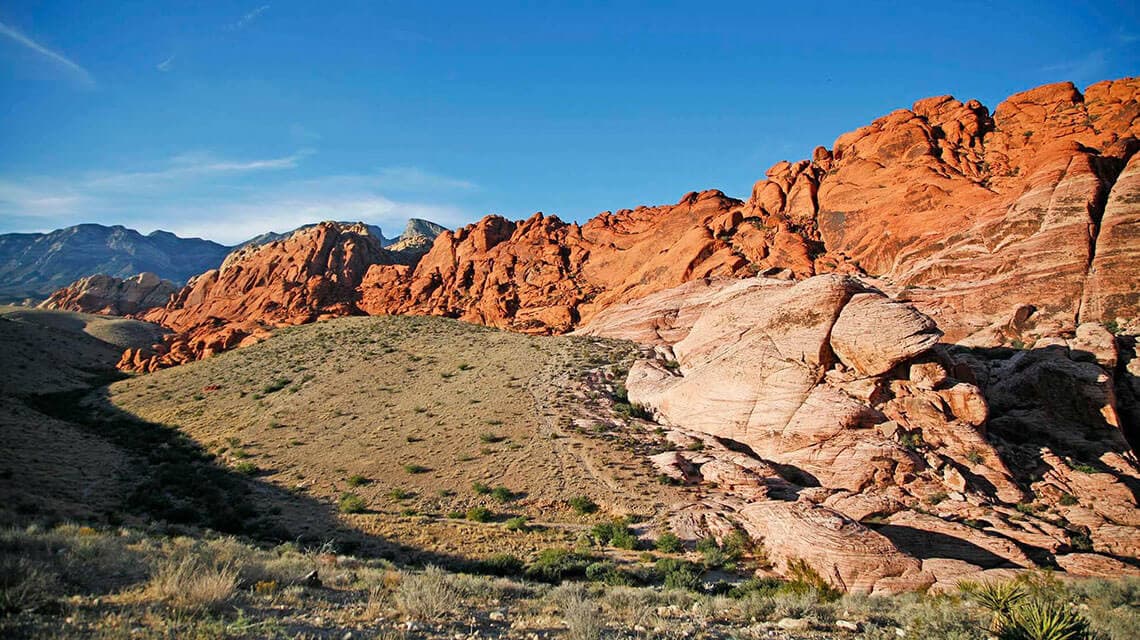
Red Rock Canyon is the 195,819-acre BLM-managed conservation area 17 miles west of the Strip — the single best way to understand that Las Vegas is a desert city, not just a casino corridor. The striped-sandstone escarpment, the 13-mile scenic drive, and 26 marked hiking trails add up to the single highest-yield half-day trip within 30 minutes of your hotel. 🌄

Here's the complete Red Rock Canyon Las Vegas guide for 2026, including the updated timed-entry system, the scenic drive breakdown, and the hike picks that actually earn their effort.

The 2026 Timed-Entry Reservation

The timed-entry system, introduced in 2023, is the single most important thing to know before you go:

  • Required: October 1 through May 31, 8 AM to 5 PM daily.
  • Not required: June 1 through September 30 (summer — when it's too hot anyway) and before 8 AM / after 5 PM year-round.
  • Cost: $2 reservation fee + $15 vehicle entrance fee (good for 7 days).
  • Where to book: Recreation.gov, not at the gate. Reservations release 30 days out, in a rolling window.
  • Walk-in, bike-in, and motorcycle visits do not require the reservation — only passenger vehicles. If you miss the reservation window, show up before 8 AM and you're in without one.

    What happens if you show up without a reservation during peak hours? You'll be turned around at the gate. There is no walk-up availability during peak season.

    When do the reservations sell out? Saturday and Sunday morning slots (8 AM–11 AM) during spring and fall sell out 7–14 days in advance. Weekday slots are usually available within 48 hours.

    The 13-Mile Scenic Drive

    The scenic loop drive is the default Red Rock experience. One-way loop, 13 miles, no time limit other than the gate-close time (5 PM start, 8 PM exit in summer; shorter in winter).

    Major pullouts, in order:

  • Visitor Center. Start here. Topo relief map, interpretive exhibits, bathroom, water fill-up, trail info.
  • Calico Hills Overlooks (1 and 2). Candy-striped sandstone formations, short 5-minute walks from the parking lots. Photographer-favorite sunrise spot.
  • Sandstone Quarry. Trailhead for Calico Tanks and Turtlehead Peak. Historic 1900s sandstone mine — old cut blocks still visible.
  • High Point Overlook. Highest pullout on the drive. 360° view of the escarpment and the valley behind.
  • Ice Box Canyon trailhead. 2.6-mile round-trip hike into a shaded slot canyon with a seasonal waterfall.
  • Pine Creek Canyon. Historic Wilson homestead (1920s) and Pine Creek trailhead. Grassy meadow uncommon in this landscape.
  • Oak Creek Canyon. Quieter trailhead for backcountry routes.
  • Red Rock Wash Overlook. Final pullout before the exit. Views back up-canyon.
  • Exit. Returns you to NV-159.
  • Most visitors drive the loop in 45–75 minutes with short stops. Add 2 hours for a moderate hike. Add 4 hours for a harder one.

    Best Hikes Ranked

    Shortlist for different trip profiles — see our best hiking trails near Las Vegas guide for the broader map.

    Calico Tanks (Moderate — 2.5 mi)

    Start at Sandstone Quarry. Sandy trail, rocky scramble near the top, payoff view of the Las Vegas Valley through a natural rock notch. The single most-recommended Red Rock hike. Moderate — not for toddlers, fine for anyone over 8 with normal hiking shoes.

    Ice Box Canyon (Moderate — 2.6 mi)

    Boulder-hop into a shaded slot canyon. Waterfall at the end is seasonal — running in spring, dry by July. Cooler than most trails because of the canyon shade.

    Children's Discovery Trail (Easy — 0.5 mi)

    From Willow Spring picnic area. Petroglyphs at the end of the loop. Works for small kids.

    Turtlehead Peak (Hard — 5 mi, 2,000-ft gain)

    Same trailhead as Calico Tanks, turns uphill. Steep, exposed, some third-class scrambling near the summit. Panoramic valley view from the top including the Strip skyline. Start by 6 AM in summer.

    Pine Creek Canyon (Easy-Moderate — 3 mi)

    Out-and-back past the historic Wilson homestead into the canyon. Grass, cottonwoods, and the backdrop of the tallest escarpment wall. Excellent bird-watching.

    Keystone Thrust (Moderate — 2.2 mi)

    Starts at the White Rock trailhead. Leads to the Keystone Thrust — the fault line where gray limestone was pushed over red sandstone and created the visible "striping" that gives the park its name. Worth the walk if you're interested in geology.

    Rock Climbing

    Red Rock is a world-class sandstone climbing destination. Over 2,000 routes from beginner to 5.14. Popular walls and boulders:

  • Kraft Boulders (in Calico Basin, just outside the NCA fee gate): bouldering, 400+ problems, year-round.
  • Calico Basin slabs: moderate trad and sport routes.
  • Oak Creek, Black Velvet Canyon: multi-pitch trad climbing.
  • Juniper Canyon: big-wall routes up to 2,000 feet.
  • Local climbing shop with rentals and information: Desert Rock Sports (Summerlin). Guide services run out of the Red Rock Visitor Center and from Las Vegas Climbing Guides.

    What First-Timers Get Wrong

    Patterns visitors repeat every month:

  • Coming in the afternoon in summer. The visitor center opens at 8 AM. Plan to be on the drive by 7:30 AM year-round; by 9 AM it's already 100°F at the trailheads in July.
  • Not bringing water. There is no water at the scenic drive pullouts except the Visitor Center. Bring 1 liter per hour you plan to hike.
  • Assuming the loop is hikeable. The 13-mile scenic drive is one-way; you cannot turn around. If you blow past your planned trailhead, you have to complete the loop (15+ miles of driving) to come back.
  • Skipping the Visitor Center. Start there. The topo model and trail advice save you from bad decisions.
  • Trying to do Red Rock and Valley of Fire in the same day. They're 90 minutes apart in opposite directions from Vegas. Pick one or split across two days. Our Red Rock vs Valley of Fire comparison breaks down which to prioritize if you only have time for one.
  • Driving when you could take a bike tour. Bike-share tours of the scenic loop bypass the timed-entry requirement entirely. Not a bad play on a busy weekend.
  • When to Visit

  • Best overall: October–April. Daytime highs 60–75°F, occasional snow-dusted escarpment in winter.
  • Best for photographs: first hour after sunrise. The red sandstone lights up in a way it doesn't at any other time of day.
  • Best for solitude: weekday mornings, or winter weekends (because the timed-entry system limits crowds).
  • Avoid: Saturday and Sunday afternoons March–May (wildflower season crowds), Memorial Day–Labor Day midday heat, and holiday weekends (timed-entry reservations may all be gone 2 weeks ahead).
  • Nearby Combinations

    Red Rock pairs well with:

  • Calico Basin — free access, outside the fee gate. 10 extra minutes.
  • Spring Mountain Ranch State Park — 2 miles south on NV-159. Historic ranch, picnic lawn, Super Summer Theatre in June–August. $10 vehicle fee.
  • Bonnie Springs Ranch area (now closed to public, but the road-trip viewpoint remains).
  • Downtown Summerlin lunch — 20 minutes back toward the valley. Full lifestyle shopping center with Whole Foods, Trader Joe's, or sit-down restaurants.
  • Mount Charleston — further drive (45 minutes from Red Rock), but pairs well as a two-stop desert-plus-forest day.
  • Red Rock Visitor Center

    Open daily 8 AM to 4:30 PM (extended hours in summer).

  • Exhibits: free; excellent geology and ecology displays.
  • Film: 20-minute orientation film in the theater, free.
  • Gift shop: runs by the Red Rock Canyon Interpretive Association; maps, water, snacks, basic gear.
  • Ranger talks: scheduled weekly from October–May. Check the Recreation.gov schedule.
  • What to Bring

  • Water — at least 1 liter per person per hour of hiking, plus extra in the car.
  • Sun hat, sun shirt, sunscreen.
  • Sturdy shoes with decent grip — slickrock is slippery when dusty.
  • Camera — iPhone works; wide-angle lens pays off.
  • Snacks — the Visitor Center shop has basics but no full meals.
  • Cash or card for the gate ($15 per vehicle even with a Recreation.gov reservation, or America the Beautiful pass).
  • What Not to Bring

  • Drones — prohibited throughout the NCA.
  • Off-trail climbing or scrambling plans without topo maps.
  • Dogs on most hiking trails — permitted only on the scenic drive paved shoulders and at picnic areas, not on the backcountry trails.
  • Unrealistic fitness expectations — Red Rock trails are real desert hikes. Treat them that way.
  • Common Questions

    Is Red Rock Canyon free? No. $15 per vehicle for a 7-day pass, or free with an America the Beautiful national parks pass. Additional $2 fee if you need a timed-entry reservation during peak hours.

    Can you drive through without paying? No. The scenic drive requires the entrance fee. The fee station is at the start of the 13-mile loop.

    Can you visit without a car? RTC bus route 123 stops at Calico Basin but not the main Visitor Center. Most visitors without cars take a tour — Pink Jeep Tours and Desert Adventures both run Red Rock half-day trips.

    Is Red Rock Canyon the same as Valley of Fire? No. Two different parks, about 90 minutes apart. Red Rock is closer to the Strip (17 miles); Valley of Fire is further (50 miles). Full comparison in our Red Rock vs Valley of Fire post.

    How long do I need for Red Rock? Minimum 90 minutes for the scenic drive only. 3–4 hours with a moderate hike. Full day if you're hiking a hard trail and stopping at Calico Basin + Spring Mountain Ranch.

    Red Rock Canyon is the argument for keeping a rental car at least one day of a Vegas trip. It's 30 minutes door-to-door from the Strip, the timed-entry reservation system is pushback-manageable, and the payoff is a landscape that rewrites what most visitors thought Vegas looked like. 🌵
    Share this article

    Planning a Trip to Las Vegas?

    Explore our complete guides to Las Vegas's best casinos, shows, restaurants, and hotels.